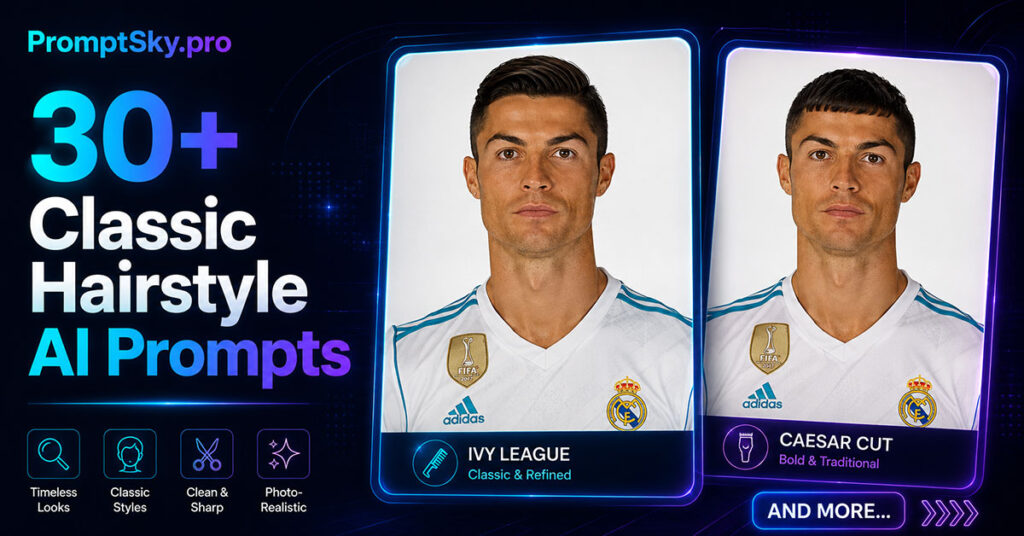
Classic hairstyle AI prompts make it easy to preview different haircuts on your own photo before deciding on a new look. This collection includes 30 detailed prompts covering popular styles such as Buzz Cut, Crew Cut, Fade, Pompadour, Quiff, Mullet, Wolf Cut, Curtains, and more.
How to Use These Hairstyle Prompts
Upload a clear photo of yourself to your preferred AI image editor, choose the hairstyle you want to try, and paste the corresponding prompt. These prompts are designed to preserve your facial identity, skin tone, expression, clothing, pose, background, and overall composition while changing the hairstyle. For more realistic results, use a well-lit photo where your face and existing hair are clearly visible. You can also adjust details such as hair length, texture, volume, fade intensity, or styling direction to create a version that better matches your preferences.
If you’re looking for more AI ideas, explore our collection of AI Prompts and discover other practical prompts for image editing, photography, social media, marketing, career, and creative work. You can also try these 30 AI Prompts for Creating Realistic Images for more detailed photo-generation and editing ideas.
If you need a specific hairstyle prompt that isn’t included in this collection, leave your request in the comments and tell us which hairstyle you want to see next.
1. Buzz Cut
A Buzz Cut is a clean, minimal hairstyle with very short and evenly trimmed hair across the entire head. It works well for a sharp, masculine, low-maintenance appearance while keeping the subject’s natural facial features fully visible.
Prompt:
A highly detailed photo edit of the subject in the provided reference image, preserving the exact identity, facial structure, skin tone, facial expression, body proportions, and natural features of the original person. Change only the hairstyle to a classic Buzz Cut with very short, evenly clipped hair across the entire scalp, creating a clean and uniform appearance. Keep the hair length extremely short while maintaining realistic scalp coverage, natural hair density, subtle texture, and believable growth patterns. Preserve the original hairline and adapt the cut naturally around the temples, forehead, ears, and back of the head. Use realistic individual hair texture, natural shadows, accurate lighting, and detailed skin-to-hair transitions. Keep the original clothing, pose, background, camera angle, composition, and photographic style unchanged. The final result should look like a professional, photorealistic hairstyle transformation rather than an artificial digital overlay.
2. Crew Cut
The Crew Cut creates a structured and timeless appearance by keeping the hair short on the sides and slightly longer on top. This prompt is useful for visualizing a neat, versatile hairstyle that remains natural and professional.
Prompt:
A highly detailed photo edit of the subject in the provided reference image, preserving the person’s exact facial identity, facial proportions, skin texture, expression, and overall appearance. Transform only the hairstyle into a classic Crew Cut, with the sides and back trimmed short and the top maintained slightly longer with a subtle gradual transition. Create a clean, masculine silhouette with naturally textured short hair that follows the shape of the subject’s head. Keep the front hairline realistic and naturally integrated with the forehead, temples, and sideburns. Add subtle variations in hair density, individual strands, realistic clipping texture, and natural directional growth. Maintain the original lighting, shadows, clothing, pose, background, framing, and camera perspective without modification. Make the hairstyle look completely realistic, professionally groomed, and naturally photographed in the original image.
3. Ivy League
The Ivy League is a polished variation of the Crew Cut with enough length on top to create a refined side-swept finish. It is ideal for a sophisticated, classic, and professional appearance without looking overly styled.
Prompt:
A highly realistic photo edit of the subject using the provided image as the exact identity and facial reference, preserving all facial characteristics, skin details, expression, and proportions. Replace only the existing hairstyle with a classic Ivy League haircut featuring short tapered sides and back with moderately longer hair on top. Style the longer top section naturally toward one side with a subtle side-swept finish, maintaining realistic volume and controlled texture. Create a clean but natural hairline with believable transitions around the temples, ears, and nape. Include fine individual hair strands, realistic density, subtle highlights, natural shadows, and authentic hair direction. Keep the subject’s original clothing, pose, facial expression, background, lighting, camera angle, and composition exactly the same. The final image should resemble a professionally photographed real person with a refined, timeless Ivy League hairstyle.
4. French Crop
The French Crop combines short sides with a textured top and a distinctive forward fringe. This style works particularly well for creating a modern but classic appearance with controlled volume and visible hair texture.
Prompt:
A highly detailed and photorealistic hairstyle transformation using the subject’s provided reference image, keeping the exact face, identity, skin tone, facial expression, head shape, and natural features unchanged. Change only the hair into a classic French Crop with short, neatly tapered sides and back and a textured top directed naturally forward. Add a defined but realistic short fringe resting across the forehead with slightly irregular textured edges rather than an artificial straight line. Preserve believable hair density, individual strands, natural growth patterns, and realistic transitions around the temples and sideburns. Use subtle matte texture and controlled volume while avoiding excessive styling products or exaggerated shapes. Keep the original clothing, pose, background, lighting, framing, and photographic conditions unchanged. The finished result must look like a genuine professional haircut captured naturally in a high-resolution photograph.
5. Caesar Cut
The Caesar Cut features short, horizontally directed hair and a compact fringe positioned close to the forehead. It provides a strong, structured appearance while remaining simple and easy to maintain.
Prompt:
A highly detailed professional photo edit of the subject in the supplied reference image, preserving the exact facial identity, facial structure, skin texture, expression, and natural proportions. Transform only the hairstyle into a traditional Caesar Cut with short, evenly textured hair across the top and closely trimmed sides and back. Create a compact forward-facing fringe positioned naturally along the upper forehead with a slightly textured and realistic edge. Maintain natural hair density and realistic individual strands, especially around the hairline, temples, and sideburns. Add subtle variation in hair length and direction so the haircut does not appear digitally painted or artificially uniform. Preserve the original pose, clothing, background, lighting, camera perspective, and composition exactly as they appear in the reference. The final image should be highly photorealistic, clean, masculine, and naturally integrated with the subject’s existing appearance.
6. Textured Crop
The Textured Crop adds more movement and dimension than a traditional crop, using layered strands and a slightly messy finish. It is useful for testing a contemporary haircut while keeping the result natural and wearable.
Prompt:
A highly detailed photorealistic edit of the person shown in the provided reference image, preserving their exact identity, facial features, skin tone, expression, proportions, and head shape. Change only the hairstyle to a modern Textured Crop with short tapered sides and back and a visibly textured top featuring layered, irregular strands. Create natural forward movement with subtle separation between individual hair sections and a slightly tousled but professionally groomed appearance. Keep the fringe short and textured with soft irregular edges that naturally follow the forehead. Add realistic hair density, fine individual strands, subtle shadows between layers, natural highlights, and believable transitions around the temples and hairline. Do not alter the original clothing, pose, background, lighting, framing, or camera angle. The finished hairstyle should look completely real, tactile, contemporary, and professionally photographed.
7. Bowl Cut
The Bowl Cut is defined by a rounded, uniform shape around the head with a recognizable straight or softly curved fringe. A realistic version should retain natural hair texture rather than appearing perfectly geometric.
Prompt:
A highly detailed realistic photo edit of the subject using the supplied reference image, maintaining the exact person’s facial identity, facial proportions, skin texture, expression, and natural appearance. Replace only the hairstyle with a classic Bowl Cut featuring a rounded silhouette and a continuous fringe that follows the natural shape of the forehead. Keep the hair moderately short around the sides and back while maintaining enough length to create the recognizable bowl-shaped structure. Make the fringe subtly irregular and naturally textured instead of perfectly computer-generated or unnaturally straight. Preserve realistic hair density, individual strands, natural growth direction, soft shadows, and believable transitions around the ears and temples. Keep the original clothing, posture, facial expression, background, lighting, composition, and camera perspective unchanged. The final result should appear as a genuine professionally photographed haircut with realistic texture and natural imperfections.
8. Undercut
The Undercut creates strong contrast between longer hair on top and noticeably shorter sides and back. It is suitable for visualizing a bold, structured hairstyle while preserving the subject’s original appearance.
Prompt:
A highly detailed photorealistic hairstyle edit of the subject in the provided reference photo, preserving the exact identity, facial structure, skin texture, expression, and natural head proportions. Change only the hairstyle into a classic Undercut with significantly shorter sides and back and noticeably longer hair remaining on the top. Create a clear separation between the longer upper section and the closely trimmed lower sections while keeping the transition naturally integrated with the head shape. Style the longer top hair with subtle natural volume and realistic directional flow without making it excessively dramatic. Include detailed individual strands, authentic hair density, realistic scalp coverage, natural shadows, and accurate hairline transitions around the temples and ears. Preserve the original clothing, pose, background, lighting, framing, and camera angle exactly. The final image should look like a real high-resolution professional photograph of the same person after receiving an authentic Undercut.
9. Fade
A classic Fade gradually transitions from very short hair near the lower sides and back into longer hair toward the upper sections. This prompt is designed for a clean, versatile haircut with a smooth and realistic graduation.
Prompt:
A highly detailed professional photo edit of the subject from the provided reference image, keeping the exact identity, facial structure, skin tone, facial expression, head shape, and natural features unchanged. Transform only the hairstyle into a classic Fade haircut with a smooth gradual reduction in hair length from the upper sides toward the lower sides and back. Create a seamless transition without visible harsh lines, unnatural patches, or abrupt changes in density. Keep the top slightly longer and naturally styled while maintaining realistic texture and directional hair growth. Carefully reproduce authentic barbering details such as subtle tapering, natural hairline transitions, fine strands, realistic shadows, and believable density around the temples and nape. Preserve the original clothing, pose, background, lighting, camera angle, and composition without alteration. Make the final hairstyle look clean, realistic, professionally barbered, and naturally captured in the original photograph.
10. Taper Fade
The Taper Fade gradually shortens the hair around the sideburns and neckline while retaining more length across the sides and top. It offers a subtle, polished appearance without the extreme contrast of a skin fade.
Prompt:
A highly detailed photorealistic edit of the subject in the supplied reference image, preserving the exact facial identity, skin texture, facial proportions, expression, and original appearance. Change only the hairstyle to a refined Taper Fade with a gradual reduction in length around the sideburns, temples, neckline, and lower back of the head. Keep more natural hair length across the upper sides and top, creating a subtle and sophisticated transition rather than an aggressively shaved appearance. Blend each section smoothly with realistic barbering precision, natural hair density, and fine individual strands. Maintain a believable hairline, authentic texture, subtle shadows, and natural growth patterns around the ears and neck. Keep the subject’s original pose, clothing, background, lighting, framing, and camera perspective completely unchanged. The final result should look like a professionally executed Taper Fade photographed naturally with high-resolution detail.
11. High Fade
A High Fade begins its transition higher on the sides of the head, creating a stronger contrast between the short lower sections and the longer hair on top. It produces a sharp and modern silhouette.
Prompt:
A highly detailed professional hairstyle transformation based on the subject’s provided reference image, preserving the exact face, identity, skin tone, facial expression, proportions, and head shape. Replace only the existing hairstyle with a High Fade featuring a noticeably elevated fade line beginning high on the sides and continuing around the back of the head. Gradually reduce the hair length from the longer top toward extremely short lower sections while maintaining a smooth and technically accurate blend. Keep the top hair longer with realistic texture and natural directional movement that complements the subject’s head shape. Add subtle individual strands, authentic hair density, natural shadows, precise temple transitions, and realistic edging around the ears and neckline. Do not change the original clothing, pose, facial expression, background, lighting, framing, or camera perspective. The final result should look like an authentic high-quality barbered High Fade captured in a professional photograph.
12. Mid Fade
The Mid Fade starts its gradual transition around the middle of the sides, balancing the clean appearance of a fade with enough surrounding hair for a versatile look. It is a practical option for both casual and professional styling.
Prompt:
A highly detailed photorealistic photo edit of the subject using the supplied reference image as the identity source, preserving the exact facial features, skin tone, expression, proportions, and natural appearance. Transform only the hairstyle into a classic Mid Fade with the fade transition beginning around the middle of the sides and continuing smoothly toward the back. Gradually decrease the hair length from the upper sides into very short lower sections while avoiding harsh lines or artificial gradients. Keep the top and upper side hair naturally longer with realistic texture, moderate volume, and believable directional growth. Add fine individual strands, subtle variations in density, natural shadows, realistic temple blending, and clean but authentic edges around the ears and neckline. Preserve the original clothing, posture, background, lighting, camera angle, framing, and composition exactly. The final image should look like a genuine professional photograph after a precise, natural-looking Mid Fade haircut.
13. Low Fade
The Low Fade keeps most of the sides intact while creating a subtle fade close to the ears and lower neckline. It is ideal for a conservative, clean, and understated hairstyle transformation.
Prompt:
A highly detailed realistic photo edit of the subject shown in the provided reference image, preserving the exact identity, facial structure, skin texture, expression, and natural proportions. Change only the hairstyle into a classic Low Fade with the gradual fade transition positioned low around the ears, sideburns, and lower back of the head. Keep most of the side hair relatively full while smoothly reducing the length only near the lowest sections. Create a soft and seamless gradient with realistic barbering detail, natural hair density, fine individual strands, and believable transitions around the temples and neckline. Maintain the top and upper sides with natural length, texture, and directional growth appropriate to the subject. Keep the original clothing, pose, background, lighting, framing, and camera perspective completely unchanged. The final hairstyle should appear subtle, polished, realistic, and professionally photographed rather than digitally generated.
14. Skin Fade
The Skin Fade gradually transitions from visible hair into nearly bare skin at the lowest portions of the sides and back. It creates a very clean, high-contrast finish that requires realistic skin and hair blending.
Prompt:
A highly detailed photorealistic hairstyle transformation using the subject’s provided reference image, preserving the exact identity, facial features, skin tone, expression, head shape, and proportions. Replace only the hairstyle with a clean Skin Fade that gradually transitions from longer hair on top through extremely short hair into nearly bare skin around the lower sides and back. Create an exceptionally smooth gradient without harsh borders, unnatural discoloration, or visible digital artifacts. Preserve realistic scalp texture and natural skin pores in the areas where the hair becomes extremely short, while maintaining authentic hair density and individual strands above the fade. Carefully blend the temples, sideburns, ears, and neckline with professional barbering precision. Keep the original clothing, pose, background, lighting, camera angle, framing, and composition unchanged. The final result should look like a real freshly executed Skin Fade captured under natural professional photography conditions.
15. Drop Fade
The Drop Fade follows the natural curvature of the head and drops lower toward the back, creating a distinctive curved fade silhouette. It is useful for achieving a more customized and dimensional fade while maintaining a natural appearance.
Prompt:
A highly detailed professional photo edit of the subject in the supplied reference image, preserving the exact facial identity, skin tone, facial structure, expression, head shape, and all natural features. Transform only the hairstyle into a classic Drop Fade where the fade line gradually curves downward behind the ears and drops lower toward the back of the head, following the subject’s natural skull shape. Blend the hair smoothly from longer upper sections into progressively shorter lower sections without creating visible hard transitions or artificial patterns. Keep the top naturally textured with realistic volume, directional growth, and believable individual strands. Add subtle barbering details, authentic hair density, realistic shadows, natural scalp visibility, and accurate transitions around the temples, ears, and neckline. Preserve the original pose, clothing, background, lighting, camera angle, framing, and composition exactly as shown in the reference image. The final result should look like a professionally executed Drop Fade with highly realistic photographic detail.
16. Burst Fade
The Burst Fade creates a curved fade that radiates around the ears while keeping more length toward the back and top. It gives the hairstyle a distinctive, modern shape without changing the subject’s identity.
Prompt:
A highly detailed photorealistic photo edit of the subject in the provided reference image, preserving the exact identity, facial structure, skin tone, facial expression, head shape, and natural features of the original person. Transform only the hairstyle into a professional Burst Fade with a curved, rounded fade concentrated around the ears and sideburn areas, while retaining more hair toward the back and upper sections. Create a smooth radial transition from longer hair into very short hair around each ear, following the natural curvature of the head. Keep the top and back hair naturally textured with realistic volume, individual strands, believable density, and authentic directional growth. Add subtle barbering details, realistic shadows, natural scalp visibility in the shortest areas, and clean but believable edges around the temples and neckline. Preserve the original clothing, pose, background, lighting, camera perspective, framing, and composition exactly as shown. The final result should look like a real professionally barbered Burst Fade captured in a high-resolution photograph.
17. Shadow Fade
The Shadow Fade keeps a small amount of visible hair throughout the faded sections instead of fading completely to bare skin. It creates a softer and more natural transition with less contrast.
Prompt:
A highly detailed professional photo edit of the subject using the provided reference image as the exact identity and facial reference, preserving all facial characteristics, skin texture, expression, proportions, and natural appearance. Change only the hairstyle into a classic Shadow Fade with a smooth gradual reduction in hair length while maintaining a subtle layer of short visible hair throughout the faded areas. Avoid exposing completely bare skin and instead create a soft shadow-like appearance near the lower sides, temples, and back of the head. Keep the upper hair slightly longer with natural texture, realistic movement, and believable density. Include fine individual strands, subtle tonal variations, realistic hairline transitions, natural shadows, and authentic barbering detail around the ears and neckline. Keep the subject’s original clothing, pose, facial expression, background, lighting, camera angle, and composition completely unchanged. The finished image should look natural, understated, clean, and indistinguishable from a real professional haircut photograph.
18. Slick Back
The Slick Back is a classic hairstyle in which the hair is combed smoothly backward from the forehead, creating a polished and sophisticated appearance. It can be styled with controlled shine while retaining realistic texture.
Prompt:
A highly detailed photorealistic hairstyle transformation of the subject in the supplied reference image, preserving the exact identity, facial structure, skin tone, facial expression, proportions, and natural head shape. Replace only the existing hairstyle with a classic Slick Back featuring medium-length hair combed smoothly backward from the forehead toward the crown and back of the head. Create controlled volume at the front with natural separation between hair sections and realistic directional flow rather than making the hair appear completely flat. Add subtle styling-product definition and a restrained natural sheen while preserving individual strands, realistic density, fine flyaway hairs, and believable texture. Maintain a clean but natural hairline around the forehead and temples with realistic transitions around the ears and back. Keep the original clothing, pose, background, lighting, camera angle, framing, and composition unchanged. The final result should look like a sophisticated, professionally styled Slick Back photographed naturally with realistic high-resolution hair detail.
19. Comb Over
The Comb Over uses a defined side direction to sweep the longer top section across the head. It creates a neat, traditional appearance that can range from conservative to contemporary depending on the texture and volume.
Prompt:
A highly detailed realistic photo edit of the subject in the provided reference image, preserving the exact facial identity, facial proportions, skin tone, expression, head shape, and natural characteristics. Transform only the hairstyle into a classic Comb Over with neatly trimmed sides and a longer top section carefully combed from one side toward the opposite side. Create a natural side direction with realistic separation between strands, moderate controlled volume, and subtle texture rather than an overly rigid or artificial finish. Maintain believable hair density and natural growth patterns around the crown, temples, and forehead, including fine individual strands and a few subtle flyaway hairs. Create a refined but realistic hairline that integrates naturally with the subject’s forehead and facial structure. Preserve the original clothing, pose, background, lighting, camera angle, framing, and composition exactly. The final result should appear as an authentic professionally groomed Comb Over photographed with realistic detail and natural lighting.
20. Side Part
The Side Part is one of the most recognizable classic hairstyles, defined by a clear but natural parting line and neatly directed hair. It creates a polished, timeless appearance suitable for both formal and everyday settings.
Prompt:
A highly detailed professional photo edit of the subject using the provided reference image, preserving the exact identity, facial structure, skin tone, facial expression, head shape, and natural proportions. Change only the hairstyle into a timeless Side Part with a clearly defined but naturally appearing part positioned according to the subject’s natural hair growth. Keep the sides and back neatly trimmed while maintaining moderate length on top, with the hair smoothly directed away from the part in opposite directions. Create realistic strand separation, natural volume, subtle texture, believable hair density, and fine individual hairs around the part and hairline. Avoid making the part excessively sharp or digitally drawn, keeping it consistent with a professionally styled real haircut. Preserve the original clothing, pose, background, lighting, camera perspective, framing, and composition without modification. The final result should look polished, classic, realistic, and naturally integrated into the original photograph.
21. Pompadour
The Pompadour is characterized by substantial volume at the front and top, with the hair swept upward and backward. A realistic version should have controlled structure, natural strand direction, and balanced proportions.
Prompt:
A highly detailed photorealistic edit of the subject in the provided reference image, preserving the exact facial identity, facial proportions, skin texture, expression, and natural head shape. Transform only the hairstyle into a classic Pompadour with noticeably increased volume at the front and upper portion of the hair, sweeping backward in a smooth and controlled direction. Create a rounded, elevated front shape with natural internal layering and realistic strand separation rather than an exaggerated or cartoon-like silhouette. Keep the sides and back neatly controlled while allowing the top to retain sufficient length for the characteristic height and backward flow. Add realistic individual hairs, subtle highlights, natural shadows between layers, believable density, and restrained styling-product texture. Preserve the subject’s original clothing, pose, background, lighting, camera angle, framing, and composition exactly. The final hairstyle should look sophisticated, dimensional, professionally styled, and completely realistic in a high-resolution portrait.
22. Quiff
The Quiff combines volume at the front with hair swept upward and slightly backward, producing a flexible and modern classic look. It is less structured than a Pompadour and should retain natural movement.
Prompt:
A highly detailed professional hairstyle transformation of the subject in the supplied reference image, keeping the exact identity, facial structure, skin tone, facial expression, proportions, and natural features unchanged. Replace only the existing hairstyle with a classic Quiff featuring moderate volume at the front and top, with the hair lifted upward and gently swept backward. Create natural texture and movement throughout the top section, with individual strands following realistic directional patterns and subtle variations in length. Keep the sides and back shorter and neatly shaped while maintaining a soft transition into the longer upper hair. Avoid excessive height, rigid styling, or unnatural glossy product effects, instead creating a believable professionally styled appearance. Add realistic hair density, fine strands, subtle shadows, natural highlights, and authentic hairline details around the forehead and temples. Preserve the original clothing, pose, background, lighting, camera perspective, framing, and composition. The final result should look like a real, stylish Quiff captured in a professional photograph.
23. Faux Hawk
The Faux Hawk creates a central raised section of hair without shaving the sides completely. It offers a bold appearance while remaining more wearable and less extreme than a traditional Mohawk.
Prompt:
A highly detailed photorealistic photo edit of the subject in the provided reference image, preserving the exact person’s identity, facial structure, skin tone, expression, proportions, and natural characteristics. Transform only the hairstyle into a modern Faux Hawk with the central strip of hair noticeably longer and styled upward through the middle of the head, while the sides remain shorter but naturally blended rather than completely shaved. Create a controlled central ridge with textured strands pointing upward and slightly backward, avoiding an exaggerated theatrical shape. Maintain realistic transitions between the shorter sides and longer center section, with believable density, individual strands, natural shadows, and subtle texture. Keep the front hairline and temples realistic and naturally integrated with the subject’s facial structure. Preserve the original clothing, pose, background, lighting, camera angle, framing, and composition without changes. The final result should appear as a realistic professional haircut with a confident, modern Faux Hawk shape.
24. Mohawk
The Mohawk features a clearly defined central strip of longer hair with significantly shorter or shaved sides. It produces a bold silhouette and should be rendered with realistic texture and natural head contours.
Prompt:
A highly detailed realistic hairstyle transformation of the subject in the supplied reference image, preserving the exact facial identity, skin tone, facial structure, expression, proportions, and natural head shape. Change only the hairstyle into a classic Mohawk featuring a clearly defined central strip of longer hair extending from the forehead toward the back of the head, with the surrounding sides cut extremely short. Create a strong but realistic contrast between the central hair section and the closely shaved sides, following the natural curvature of the scalp. Style the central strip upward with controlled texture and moderate definition while preserving individual strands, realistic density, natural movement, and subtle imperfections. Ensure the shaved areas retain realistic scalp texture, pores, and natural tonal variation without appearing digitally airbrushed. Keep the original clothing, pose, background, lighting, camera perspective, framing, and composition unchanged. The final image should look like an authentic professionally photographed Mohawk rather than a synthetic digital hairstyle overlay.
25. Spiky Hair
Spiky Hair uses separated strands directed upward and outward to create texture, movement, and a youthful appearance. The spikes should remain varied and natural instead of appearing perfectly symmetrical.
Prompt:
A highly detailed photorealistic photo edit of the subject using the provided reference image, preserving the exact identity, facial features, skin texture, expression, proportions, and natural head shape. Transform only the hairstyle into a classic Spiky Hair style with short-to-medium strands individually lifted upward and slightly outward across the top of the head. Create varied spike directions, irregular strand lengths, natural separation, and realistic texture rather than identical symmetrical spikes. Keep the sides and back shorter and neatly shaped while allowing the top to retain enough length for visible definition and movement. Add subtle styling-product texture without excessive shine, preserving fine individual hairs, realistic density, natural shadows between strands, and believable hairline transitions. Keep the original clothing, pose, background, lighting, camera angle, framing, and composition exactly unchanged. The final result should look like a naturally styled, contemporary Spiky Haircut captured in a sharp professional photograph.
26. Shag
The Shag is a layered hairstyle with visible texture, movement, and slightly messy volume throughout the hair. It creates a relaxed and expressive appearance while maintaining a deliberate haircut structure.
Prompt:
A highly detailed professional photo edit of the subject in the supplied reference image, preserving the exact identity, facial structure, skin tone, expression, proportions, and natural facial characteristics. Replace only the existing hairstyle with a classic layered Shag featuring multiple visible layers, natural movement, soft volume, and slightly tousled texture throughout the top, sides, and back. Allow different sections of hair to fall naturally around the forehead, temples, ears, and neck while maintaining a coherent haircut shape. Create realistic feathered ends, subtle separation between layers, individual strands, fine flyaway hairs, believable density, and natural directional growth. Avoid excessive artificial messiness and keep the style intentionally textured, relaxed, and professionally cut. Preserve the original clothing, pose, background, lighting, camera angle, framing, and composition exactly as shown in the reference. The finished image should look like a real person wearing a naturally styled Shag haircut with authentic photographic texture.
27. Mullet
The Mullet keeps the front and sides relatively shorter while maintaining noticeably longer hair toward the back and neckline. The contrast should be clear but naturally blended and proportioned to the subject.
Prompt:
A highly detailed photorealistic hairstyle transformation based on the subject’s provided reference image, preserving the exact facial identity, skin tone, facial structure, expression, proportions, and natural head shape. Change only the hairstyle into a classic Mullet with shorter and more controlled hair across the front and sides while allowing significantly longer hair to extend toward the back and neckline. Create a natural transition between the shorter upper sections and the longer rear length without making the haircut appear artificially disconnected. Add layered texture and realistic movement throughout the longer back section, with individual strands, subtle flyaway hairs, believable density, natural shadows, and authentic growth patterns. Keep the front hairline and temples realistic and consistent with the subject’s original appearance. Preserve the original clothing, pose, background, lighting, camera angle, framing, and composition completely unchanged. The final result should look like a genuine professionally photographed Mullet with realistic proportions and natural hair behavior.
28. Wolf Cut
The Wolf Cut combines the layered texture of a Shag with the longer silhouette associated with a Mullet. It creates a deliberately messy but structured appearance with significant volume and movement.
Prompt:
A highly detailed professional photo edit of the subject in the provided reference image, preserving the exact identity, facial structure, skin tone, expression, proportions, and natural features. Transform only the hairstyle into a modern Wolf Cut featuring heavily layered hair, noticeable texture, soft volume at the crown, and longer tapered sections extending toward the back and neckline. Create a natural combination of choppy upper layers and flowing lower lengths, with irregular but intentional strand separation throughout the hairstyle. Add realistic movement around the forehead, temples, cheeks, ears, and neck while maintaining a balanced haircut silhouette. Include fine individual hairs, subtle flyaways, realistic density, natural shadows, believable strand direction, and authentic texture without making the hair look artificially messy. Preserve the original clothing, pose, background, lighting, camera perspective, framing, and composition exactly. The finished result should look like a real professionally cut Wolf Cut with detailed, tactile, high-resolution hair texture.
29. Edgar Cut
The Edgar Cut is recognizable by its short, structured top, sharply defined fringe, and tapered or faded sides. The defining front edge should be precise while still maintaining realistic hair texture and natural facial integration.
Prompt:
A highly detailed photorealistic hairstyle edit of the subject using the supplied reference image, preserving the exact facial identity, facial structure, skin tone, expression, proportions, and natural head shape. Change only the hairstyle into a modern Edgar Cut featuring a short textured top, closely tapered or faded sides, and a distinctive straight, compact fringe positioned across the forehead. Make the front edge clean and intentional while retaining subtle natural irregularities in individual hair strands so it does not appear digitally drawn. Create realistic texture across the top with short directional strands, natural density, subtle shadows, and believable transitions around the temples and sideburns. Maintain a sharp but authentic hairline and ensure the hairstyle follows the subject’s actual head shape rather than imposing an unnatural silhouette. Keep the original clothing, pose, background, lighting, camera angle, framing, and composition completely unchanged. The final result should resemble a real professionally barbered Edgar Cut photographed in high resolution.
30. Curtains
Curtains are defined by a center part with longer hair falling naturally toward both sides of the face. The style can range from softly textured and relaxed to polished, but should preserve natural movement and symmetry without looking artificial.
Prompt:
A highly detailed professional photo edit of the subject in the provided reference image, preserving the exact identity, facial structure, skin tone, facial expression, proportions, and natural appearance. Transform only the hairstyle into a classic Curtains haircut with medium-length hair parted naturally at the center and flowing downward on both sides of the forehead and face. Create a soft central part with realistic separation and allow the hair to frame the face naturally without covering or changing the subject’s facial features. Add layered texture, natural movement, subtle volume, individual strands, realistic density, fine flyaway hairs, and believable directional growth throughout the hairstyle. Ensure both sides appear naturally balanced while avoiding perfectly mirrored or artificial strand placement. Preserve the original clothing, pose, background, lighting, camera perspective, framing, and composition exactly as shown in the reference image. The final result should look like a real professionally styled Curtains haircut captured with natural lighting and high-resolution photographic detail.