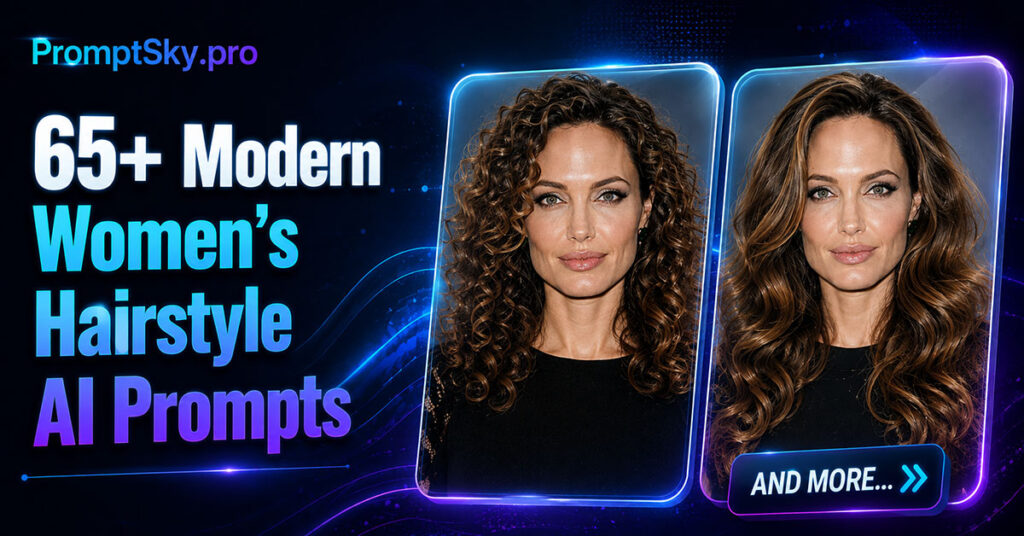
Modern women’s hairstyle AI prompts let you preview popular haircuts and trendy styles on your own photo before making a real change. This collection includes 65 detailed prompts covering Bobs, Pixie Cuts, Wolf Cuts, Butterfly Haircuts, layered styles, and modern bangs.
How to Use These Modern Women’s Hairstyle Prompts
Upload a clear, high-resolution photo of yourself to an AI image editor and paste the prompt for the hairstyle you want to test. The prompts are written to modify the hair while keeping your identity, facial features, skin tone, expression, clothing, pose, background, lighting, and camera composition consistent. For a cleaner result, choose a front-facing or slightly angled photo where your hair and face are clearly visible. You can also adjust the requested length, texture, volume, layering, or fringe style to make the transformation closer to your preferred look.
For more realistic photo-editing ideas, explore 30 AI Prompts for Creating Realistic Images, which covers a broader range of realistic image-generation and editing concepts. If you want to compare these modern women’s styles with classic cuts, check out 30 Classic Hairstyle AI Prompts for Realistic Haircut Edits.
You can also browse AI Prompts for other useful categories, including Photography Prompts, Career & Resume Prompts, Marketing Prompts, Product Promotion Prompts, Personal Growth Prompts, Social Media Prompts, and Writing & Creativity Prompts.
Need a hairstyle that isn’t included in this collection? Leave your request in the comments and tell us which haircut or hairstyle you want a prompt for next.
1. Bob Cut
The Bob Cut is a timeless short-to-medium hairstyle that creates a clean silhouette around the jawline or slightly below it. This prompt is designed to visualize a polished, balanced bob while keeping the subject’s facial identity and original photo unchanged.
Prompt:
A highly detailed photorealistic photo edit of the woman in the provided reference image, preserving her exact identity, facial structure, skin tone, facial expression, head shape, body proportions, and natural features. Transform only the hairstyle into a classic Bob Cut with hair ending naturally around the jawline or slightly below it, creating a clean and balanced silhouette. Keep the hair smooth with subtle natural movement, realistic density, individual strands, and slight variations in length around the ends. Shape the sides naturally around the face while maintaining a believable hairline and realistic transitions near the ears and temples. Add soft highlights, natural shadows, subtle flyaway hairs, and authentic hair texture without excessive styling or artificial shine. Preserve the original clothing, pose, background, lighting, camera angle, framing, and composition exactly as shown. The final image should look like a professionally photographed woman with a realistic, polished Bob Cut.
2. Blunt Bob
The Blunt Bob is defined by a strong, clean perimeter with minimal layering and visibly full ends. It creates a sharp, contemporary appearance while remaining simple and sophisticated.
Prompt:
A highly detailed realistic photo edit of the woman in the supplied reference image, preserving her exact facial identity, facial proportions, skin tone, expression, head shape, and natural appearance. Change only the hairstyle into a modern Blunt Bob with a clean, solid perimeter ending around the jawline or slightly below the chin. Keep the ends visibly full and relatively uniform, with minimal layering and a precise professional haircut shape. Maintain smooth, straight or subtly textured hair with realistic strand separation, natural density, believable weight, and tiny irregularities along the ends. Create natural framing around the cheeks and jaw without changing the subject’s facial structure or expression. Add realistic highlights, soft shadows, fine flyaway hairs, and authentic hair texture rather than an overly glossy artificial finish. Keep the original clothing, pose, background, lighting, camera perspective, framing, and composition completely unchanged. The final result should resemble a real high-resolution professional portrait of a woman with a sleek Blunt Bob.
3. French Bob
The French Bob is a shorter, effortlessly elegant bob often paired with soft texture and a fringe. It gives the subject a chic, refined appearance while retaining a relaxed and natural quality.
Prompt:
A highly detailed photorealistic hairstyle transformation of the woman in the provided reference image, preserving her exact identity, facial structure, skin tone, facial expression, proportions, and natural features. Transform only the hairstyle into a classic French Bob ending around the chin or slightly above the jawline, with soft natural texture and an effortlessly chic silhouette. Add a subtle short fringe that rests naturally across the forehead, with slightly irregular edges and realistic individual strands rather than a perfectly artificial line. Keep the bob gently curved around the face with natural volume, believable density, and soft movement through the ends. Include fine hair strands, subtle flyaways, realistic shadows, natural highlights, and authentic texture. Ensure the hairstyle complements the existing face shape without modifying any facial characteristics. Preserve the original clothing, pose, background, lighting, camera angle, framing, and composition exactly. The finished image should look like a naturally styled French Bob captured in a professional fashion photograph.
4. Italian Bob
The Italian Bob is a fuller, sophisticated bob with substantial volume and a polished but relaxed shape. It works particularly well for creating a luxurious, dense hairstyle that feels elegant rather than overly structured.
Prompt:
A highly detailed professional photo edit of the woman using the supplied reference image as the exact identity reference, preserving her facial structure, skin tone, expression, proportions, and natural characteristics. Change only the hairstyle into a sophisticated Italian Bob with a full, slightly longer shape ending around the chin or upper neck and substantial natural volume throughout the sides. Create softly rounded ends and a polished silhouette while maintaining relaxed movement and realistic weight. Keep the hair naturally dense with visible individual strands, subtle layering, believable texture, and controlled volume rather than an exaggerated salon blowout. Add gentle face-framing movement, natural highlights, soft shadows, and fine flyaway hairs around the outer edges. Maintain a realistic hairline and natural transitions around the temples, ears, and neckline. Preserve the original clothing, pose, background, lighting, camera perspective, framing, and composition without alteration. The final result should look like a luxurious, professionally styled Italian Bob photographed in high resolution.
5. A-Line Bob
The A-Line Bob is shorter at the back and gradually becomes longer toward the front, creating a clean angled silhouette. This prompt emphasizes the recognizable forward length while keeping the transition realistic.
Prompt:
A highly detailed photorealistic photo edit of the woman in the provided reference image, preserving her exact identity, facial features, skin tone, expression, head shape, and natural proportions. Transform only the hairstyle into a classic A-Line Bob with the back noticeably shorter and the front sections gradually extending longer toward the jaw and lower face. Create a clean, elegant diagonal silhouette that follows the natural shape of the head and shoulders without appearing overly geometric. Keep the hair smooth and moderately full with realistic individual strands, subtle movement, believable density, and natural weight through the longer front sections. Add soft highlights, realistic shadows, fine flyaway hairs, and authentic texture around the ends and hairline. Ensure the longer front pieces frame the face naturally without covering or altering the subject’s facial features. Preserve the original clothing, pose, background, lighting, camera angle, framing, and composition exactly. The final image should look like a professionally executed A-Line Bob photographed naturally.
6. Inverted Bob
The Inverted Bob features a stacked and shorter back with progressively longer front sections. It creates a strong modern silhouette with added volume around the crown and back.
Prompt:
A highly detailed realistic hairstyle transformation of the woman in the supplied reference image, preserving her exact facial identity, facial structure, skin tone, facial expression, proportions, and natural head shape. Change only the hairstyle into a modern Inverted Bob with a shorter, subtly stacked back that gradually transitions into longer front sections around the jawline. Create natural lift and fullness toward the back while keeping the longer front pieces sleek and softly framing the face. Maintain realistic layering and graduated lengths rather than creating an exaggerated geometric shape. Add individual hair strands, believable density, subtle texture, natural highlights, soft shadows, and fine flyaway hairs around the edges. Ensure the haircut follows the woman’s actual head shape and integrates naturally around the ears, temples, and neckline. Preserve the original clothing, pose, background, lighting, camera perspective, framing, and composition completely unchanged. The final result should resemble a professionally cut, modern Inverted Bob in a high-resolution realistic photograph.
7. Asymmetrical Bob
The Asymmetrical Bob intentionally uses different lengths on each side to create a distinctive and contemporary silhouette. The asymmetry should be obvious but still look like a professionally designed haircut.
Prompt:
A highly detailed photorealistic photo edit of the woman in the provided reference image, preserving her exact identity, facial structure, skin tone, expression, proportions, and natural characteristics. Transform only the hairstyle into a modern Asymmetrical Bob with one side visibly shorter than the other, creating a deliberate uneven silhouette while maintaining professional haircut proportions. Allow the longer side to extend naturally toward the jaw or slightly below it while the shorter side remains closer to the cheek or chin. Keep the hair smooth with subtle movement, realistic strand separation, natural density, and believable weight differences between both sides. Add fine individual hairs, soft highlights, realistic shadows, subtle flyaways, and natural transitions around the temples and ears. Ensure the asymmetrical shape looks intentionally designed rather than accidentally uneven or digitally distorted. Preserve the original clothing, pose, background, lighting, camera angle, framing, and composition exactly. The finished image should look like an authentic editorial-quality photograph of a woman wearing a stylish Asymmetrical Bob.
8. Lob
The Lob, or Long Bob, extends below the chin and usually reaches the shoulders or collarbone. It provides the structure of a bob while offering more length and styling flexibility.
Prompt:
A highly detailed professional hairstyle edit of the woman in the provided reference image, preserving her exact facial identity, facial structure, skin tone, expression, head shape, and natural proportions. Transform only the hairstyle into a classic Lob, with the hair extending naturally to the shoulders or slightly above the collarbone while maintaining a clean long-bob silhouette. Keep the overall shape polished but flexible, with subtle layers or natural variation through the ends and realistic movement around the shoulders. Maintain believable hair density, individual strands, natural texture, soft highlights, and realistic shadows without excessive styling-product shine. Add a few fine flyaway hairs and subtle imperfections to make the hairstyle appear genuinely photographed. Ensure the front sections naturally frame the face without changing the subject’s facial features. Preserve the original clothing, pose, background, lighting, camera perspective, framing, and composition exactly. The final result should look like a sophisticated, natural Lob created by a professional stylist.
9. Shaggy Bob
The Shaggy Bob combines the compact shape of a bob with textured layers, feathered ends, and a deliberately relaxed finish. It is ideal for creating movement and volume without making the hair look overly polished.
Prompt:
A highly detailed photorealistic photo edit of the woman in the supplied reference image, preserving her exact identity, facial features, skin tone, facial expression, proportions, and natural appearance. Change only the hairstyle into a textured Shaggy Bob with a bob-length silhouette combined with multiple choppy, feathered layers and soft natural volume. Create deliberately irregular ends and varied strand lengths while keeping the overall haircut balanced and professionally shaped. Add subtle movement around the crown, sides, and face with lightweight layers that create a slightly tousled but intentional appearance. Include realistic individual strands, natural density, fine flyaway hairs, soft shadows, subtle highlights, and believable hair texture. Avoid excessive messiness or artificial volume and maintain realistic hair behavior around the ears, temples, and neckline. Preserve the original clothing, pose, background, lighting, camera angle, framing, and composition unchanged. The final image should look like a genuine professional portrait featuring a naturally textured Shaggy Bob.
10. Choppy Bob
The Choppy Bob uses uneven layers and textured ends to create a deliberately edgy, contemporary appearance. The haircut should retain a clear bob structure while allowing visible variation and movement.
Prompt:
A highly detailed realistic photo edit of the woman in the provided reference image, preserving her exact facial identity, skin tone, facial structure, expression, head shape, and natural proportions. Transform only the hairstyle into a modern Choppy Bob featuring short-to-medium length hair with visibly textured, uneven layers and intentionally irregular ends. Create varied lengths throughout the haircut to produce natural movement and separation while maintaining a recognizable bob silhouette. Keep the hair moderately voluminous with realistic individual strands, believable density, subtle texture, fine flyaways, and natural directional growth. Add soft shadows between the layers and understated highlights that emphasize the dimensional texture without creating artificial shine. Ensure the front sections frame the face naturally and the choppy ends look professionally cut rather than randomly damaged. Preserve the original clothing, pose, background, lighting, camera angle, framing, and composition exactly. The final result should look like a fashionable, professionally photographed Choppy Bob with authentic hair texture.
11. Pixie Cut
The Pixie Cut is a short, feminine hairstyle with closely cropped sides and back and slightly longer textured sections on top. It creates a fresh, confident look while keeping the face highly visible.
Prompt:
A highly detailed photorealistic hairstyle transformation of the woman in the provided reference image, preserving her exact facial identity, facial structure, skin tone, expression, head shape, and natural proportions. Change only the hairstyle into a modern Pixie Cut with short tapered sides and back and slightly longer textured hair across the top and front. Create a soft, feminine silhouette with subtle volume and directional texture rather than making the haircut excessively severe or masculine. Keep the top hair naturally separated into short textured strands with realistic density, fine flyaways, and believable growth patterns around the forehead and crown. Blend the sides and neckline smoothly while maintaining realistic hairline details around the ears and temples. Add natural shadows, subtle highlights, and authentic hair texture without excessive product or artificial gloss. Preserve the original clothing, pose, background, lighting, camera perspective, framing, and composition completely unchanged. The final image should look like a real professionally styled Pixie Cut captured in a high-resolution portrait.
12. Bixie
The Bixie blends the short structure of a Pixie Cut with the fuller, layered shape of a Bob. It creates a versatile hairstyle with texture around the ears, crown, and nape while maintaining a feminine silhouette.
Prompt:
A highly detailed professional photo edit of the woman in the supplied reference image, preserving her exact identity, facial structure, skin tone, expression, proportions, and natural characteristics. Transform only the hairstyle into a modern Bixie, combining the short, tapered structure of a Pixie with the fuller length and layered texture of a Bob. Keep the hair slightly longer around the sides, ears, and nape while maintaining a compact shape and textured crown. Create soft, choppy layers with natural movement, subtle volume, and realistic strand separation throughout the hairstyle. Add fine individual hairs, believable density, subtle flyaways, natural shadows, and restrained highlights to create authentic dimensional texture. Ensure the haircut naturally follows the subject’s head shape and frames the face without changing any facial features. Preserve the original clothing, pose, background, lighting, camera angle, framing, and composition exactly. The finished image should look like a professionally styled Bixie with a modern, effortless, realistic appearance.
13. Mixie
The Mixie combines the short, textured front and sides of a Pixie with the longer, more rebellious back of a Mullet. It creates a bold contemporary shape while maintaining natural hair movement.
Prompt:
A highly detailed photorealistic hairstyle transformation of the woman in the provided reference image, preserving her exact facial identity, facial structure, skin tone, expression, proportions, and natural features. Change only the hairstyle into a modern Mixie, combining a short textured Pixie-inspired front and sides with noticeably longer, layered sections extending toward the back and nape. Create a distinctive contrast between the cropped upper areas and the elongated rear layers while keeping the transition intentionally soft and professionally shaped. Add choppy texture around the crown and temples with lightweight movement through the longer back section. Maintain realistic individual strands, natural density, subtle flyaways, believable shadows, and authentic hair growth patterns. Keep the face completely unchanged and ensure the haircut follows the natural contours of the head and neck. Preserve the original clothing, pose, background, lighting, camera perspective, framing, and composition exactly. The final image should resemble an authentic editorial photograph of a woman with a stylish, edgy Mixie haircut.
14. Wolf Cut
The Wolf Cut combines shaggy layers, crown volume, face-framing texture, and longer lengths toward the back. It creates a deliberately undone yet highly structured modern hairstyle.
Prompt:
A highly detailed realistic photo edit of the woman in the provided reference image, preserving her exact identity, facial structure, skin tone, expression, proportions, and natural appearance. Transform only the hairstyle into a modern Wolf Cut featuring heavily layered texture, noticeable crown volume, shorter face-framing sections, and longer tapered lengths toward the back. Create choppy but intentional layers with varied strand lengths and natural movement throughout the hairstyle. Add soft volume around the crown and temples while allowing the longer back sections to fall naturally around the neck and shoulders. Include realistic individual strands, subtle frizz, fine flyaway hairs, believable density, natural highlights, and dimensional shadows between layers. Avoid making the hair excessively chaotic; maintain a professionally designed silhouette with authentic texture. Preserve the original clothing, pose, background, lighting, camera angle, framing, and composition exactly. The final result should look like a real professionally styled Wolf Cut photographed with detailed high-resolution hair texture.
15. Butterfly Haircut
The Butterfly Haircut uses voluminous layers and dramatic face-framing pieces that create a soft, flowing effect while preserving significant length. It is ideal for a glamorous yet natural transformation.
Prompt:
A highly detailed photorealistic photo edit of the woman in the provided reference image, preserving her exact facial identity, facial structure, skin tone, expression, proportions, and natural head shape. Change only the hairstyle into a modern Butterfly Haircut with layered volume around the crown, sweeping face-framing sections, and long flowing layers extending toward the shoulders and back. Create soft feathered pieces around the face that curve outward and gradually blend into the longer lengths, producing a light and dimensional silhouette. Add controlled volume without making the hair unnaturally large, maintaining realistic weight and natural movement between each layer. Include fine individual strands, subtle flyaways, realistic density, soft highlights, natural shadows, and believable hair texture throughout. Ensure the hairstyle frames the existing face without modifying its shape, expression, or proportions. Preserve the original clothing, pose, background, lighting, camera perspective, framing, and composition exactly. The final image should look like a professionally styled Butterfly Haircut captured in a polished, realistic fashion portrait.
16. Octopus Cut
The Octopus Cut combines a voluminous, layered crown with longer, separated sections that create a distinctive tentacle-like silhouette. It is ideal for a textured, editorial hairstyle with movement and strong layering.
Prompt:
A highly detailed photorealistic photo edit of the woman in the provided reference image, preserving her exact identity, facial structure, skin tone, facial expression, head shape, body proportions, and natural features. Transform only the hairstyle into a modern Octopus Cut featuring substantial volume and layered texture around the crown, with multiple longer, separated sections extending toward the shoulders and back. Create a rounded, voluminous upper shape that gradually transitions into thinner, flowing lengths, producing the recognizable tentacle-like silhouette without becoming exaggerated or cartoonish. Add choppy face-framing layers around the cheeks and jawline that blend naturally into the longer sections. Maintain realistic individual strands, varied layer lengths, believable density, subtle flyaway hairs, natural highlights, and dimensional shadows between the layers. Keep the original clothing, pose, background, lighting, camera angle, framing, and composition completely unchanged. The final result should look like a professionally styled, fashion-forward Octopus Cut photographed with realistic high-resolution hair detail.
17. Jellyfish Cut
The Jellyfish Cut creates a dramatic contrast between a short, rounded upper section and significantly longer hair underneath. The two distinct levels should remain recognizable while blending naturally with realistic hair texture.
Prompt:
A highly detailed professional photo edit of the woman in the supplied reference image, preserving her exact identity, facial structure, skin tone, facial expression, proportions, and natural appearance. Change only the hairstyle into a modern Jellyfish Cut with a clearly defined short, rounded upper layer around the head and significantly longer hair falling underneath. Create a distinct two-tiered silhouette where the shorter upper section resembles a structured bob while the lower section extends noticeably longer toward the shoulders or beyond. Maintain realistic transitions between the two layers without making them appear digitally separated or unnatural. Add smooth texture to the upper section and natural movement to the longer lower strands, with realistic density, individual hairs, subtle flyaways, natural highlights, and soft shadows. Ensure the haircut follows the subject’s actual head shape and frames the face without changing any facial characteristics. Preserve the original clothing, pose, background, lighting, camera perspective, framing, and composition exactly. The finished result should look like an authentic, professionally photographed Jellyfish Cut with a bold contemporary silhouette.
18. Kitty Cut
The Kitty Cut is a softer, more refined layered hairstyle with medium-length movement and subtle face framing. It provides volume and shape without the heavily choppy texture of a Wolf or Shag Cut.
Prompt:
A highly detailed photorealistic hairstyle transformation of the woman in the provided reference image, preserving her exact facial identity, facial structure, skin tone, expression, proportions, and natural features. Transform only the hairstyle into a modern Kitty Cut featuring medium-length, softly layered hair with subtle volume and graceful movement around the face and shoulders. Create gentle face-framing layers that begin around the cheekbones and gradually blend into longer sections, producing a polished but naturally relaxed silhouette. Keep the layers smooth and lightweight with moderate texture rather than aggressive choppiness, allowing the hair to move naturally around the shoulders. Add realistic individual strands, natural density, fine flyaway hairs, soft highlights, and dimensional shadows to preserve authentic photographic texture. Maintain a believable hairline and natural transitions around the temples, ears, and neckline. Preserve the original clothing, pose, background, lighting, camera angle, framing, and composition exactly. The final result should look like a sophisticated, modern Kitty Cut styled naturally for a high-resolution professional portrait.
19. Rachel Cut
The Rachel Cut is known for its voluminous layers, face-framing shape, and smooth movement around the shoulders. It creates a polished 1990s-inspired appearance while remaining highly wearable.
Prompt:
A highly detailed professional photo edit of the woman in the supplied reference image, preserving her exact identity, facial structure, skin tone, facial expression, head shape, proportions, and natural characteristics. Change only the hairstyle into a classic Rachel Cut featuring medium-length layered hair with substantial volume around the crown, sides, and face. Create smooth, feathered layers that frame the cheeks and jawline before flowing into longer sections around the shoulders. Add natural lift at the roots and controlled outward movement through the layers while avoiding excessive or artificial volume. Maintain realistic individual strands, believable hair density, subtle flyaways, natural highlights, and soft shadows between the layers. Ensure the hairstyle complements the existing face shape without changing the subject’s facial features or expression. Preserve the original clothing, pose, background, lighting, camera angle, framing, and composition completely unchanged. The final image should resemble a professionally styled 1990s-inspired Rachel Cut captured in a realistic fashion portrait.
20. C-Cut
The C-Cut features softly curved layers that create a rounded C-shaped frame around the face. It provides a polished, flowing appearance with gentle movement rather than harsh layering.
Prompt:
A highly detailed photorealistic photo edit of the woman in the provided reference image, preserving her exact facial identity, facial structure, skin tone, expression, proportions, and natural appearance. Transform only the hairstyle into a modern C-Cut with softly curved layers that create a subtle C-shaped silhouette around the face and continue smoothly into the longer hair. Create gentle face-framing sections that curve inward around the cheeks and jaw before blending naturally into the rest of the hairstyle. Maintain medium-to-long length with soft volume, realistic movement, and smooth layered transitions throughout the hair. Add individual strands, natural density, subtle flyaways, soft highlights, and realistic shadows to create dimensional texture without excessive styling. Keep the hairline and facial features completely natural and unchanged. Preserve the original clothing, pose, background, lighting, camera perspective, framing, and composition exactly as shown. The final result should look like a professionally cut, elegant C-Cut photographed with realistic high-resolution detail.
21. Step Cut
The Step Cut uses clearly separated horizontal or graduated layers that create visible levels throughout the hairstyle. It adds structure, volume, and movement while retaining a distinct layered appearance.
Prompt:
A highly detailed realistic hairstyle transformation of the woman in the supplied reference image, preserving her exact identity, facial structure, skin tone, expression, head shape, proportions, and natural features. Change only the hairstyle into a modern Step Cut with clearly defined layers arranged in distinct graduated sections, creating visible levels through the sides and back. Keep each step smoothly integrated into the next while maintaining enough definition for the layered structure to remain recognizable. Add natural volume and movement around the crown and mid-lengths, with realistic strand separation, believable density, fine flyaway hairs, and subtle texture. Avoid overly geometric or artificial edges by allowing individual strands to fall naturally around each layered section. Preserve the original clothing, pose, background, lighting, camera angle, framing, and composition exactly. The final image should look like a professionally executed layered Step Cut with authentic movement and realistic photographic hair detail.
22. U-Shaped Layers
U-Shaped Layers combine long, flowing hair with graduated layers that form a soft U-shaped silhouette at the back. The style preserves length while adding movement and dimension throughout the ends.
Prompt:
A highly detailed photorealistic photo edit of the woman in the provided reference image, preserving her exact identity, facial structure, skin tone, facial expression, head shape, and natural proportions. Transform only the hairstyle into long U-Shaped Layers, maintaining substantial overall length while creating graduated layers that form a soft U-shaped silhouette at the back. Keep the center-back section slightly longer than the sides, with the layered lengths gradually curving upward toward the outer edges. Add subtle face-framing layers that blend naturally into the longer sections around the shoulders and back. Maintain realistic hair density, individual strands, natural movement, soft texture, fine flyaways, believable highlights, and dimensional shadows. Ensure the U-shaped structure looks professionally cut but not perfectly geometric, with natural variation in individual strand lengths. Preserve the original clothing, pose, background, lighting, camera perspective, framing, and composition completely unchanged. The final result should look like healthy, professionally layered long hair photographed naturally.
23. Curtain Bangs
Curtain Bangs are parted around the center and sweep outward to frame the forehead, eyes, and cheekbones. They provide a soft facial frame and can be integrated with short, medium, or long hairstyles.
Prompt:
A highly detailed professional hairstyle edit of the woman in the supplied reference image, preserving her exact facial identity, facial structure, skin tone, expression, proportions, and natural characteristics. Change only the hairstyle by adding modern Curtain Bangs that part naturally near the center of the forehead and sweep outward toward both sides of the face. Create shorter pieces near the center that gradually become longer toward the temples and cheekbones, blending smoothly into the existing hairstyle. Keep the bangs soft, lightweight, and naturally feathered rather than perfectly symmetrical or rigid. Add realistic individual strands, subtle flyaways, natural density, soft highlights, and believable shadows around the forehead and temples. Ensure the bangs frame the existing face without covering or altering the subject’s facial features, eyes, or expression. Preserve the original clothing, pose, background, lighting, camera angle, framing, and composition exactly. The final result should look like a professionally styled woman with natural, flattering Curtain Bangs in a high-resolution photograph.
24. Wispy Bangs
Wispy Bangs are lightweight, delicate bangs with visible separation between fine strands. They create a soft and subtle frame around the forehead without the heaviness of blunt bangs.
Prompt:
A highly detailed photorealistic photo edit of the woman in the provided reference image, preserving her exact identity, facial structure, skin tone, expression, proportions, and natural appearance. Transform only the hairstyle by adding delicate Wispy Bangs across the forehead, using fine, lightweight strands with visible separation and slightly irregular lengths. Keep the bangs soft and airy, allowing small spaces between strands so portions of the forehead remain naturally visible. Gradually blend the outer sections of the bangs into the hair around the temples and sides of the face. Add realistic individual hairs, subtle flyaways, natural density, fine texture, soft highlights, and gentle shadows to prevent the bangs from appearing digitally painted or overly dense. Keep the subject’s facial features, eyes, eyebrows, expression, and skin completely unchanged. Preserve the original clothing, pose, background, lighting, camera perspective, framing, and composition exactly. The finished result should look like naturally styled Wispy Bangs photographed in a realistic professional portrait.
25. Micro Bangs
Micro Bangs are very short bangs positioned noticeably above the eyebrows, creating a bold and fashion-forward appearance. The short length should be clearly visible while retaining natural strand texture and realistic integration with the face.
Prompt:
A highly detailed professional photo edit of the woman in the supplied reference image, preserving her exact identity, facial structure, skin tone, facial expression, proportions, and natural features. Change only the hairstyle by adding distinctive Micro Bangs that sit noticeably above the eyebrows, creating a short, bold, contemporary fringe across the upper forehead. Keep the bangs relatively narrow and textured with slightly varied strand lengths rather than creating an unnaturally perfect horizontal edge. Blend the outer portions naturally into the surrounding hair while maintaining a clear distinction between the very short fringe and the longer hairstyle behind it. Add realistic individual strands, fine flyaways, natural density, subtle shadows, and authentic hair texture without excessive shine or digital smoothness. Ensure the eyebrows, eyes, forehead, facial expression, and all other facial features remain completely unchanged. Preserve the original clothing, pose, background, lighting, camera angle, framing, and composition exactly. The final result should look like a confident, editorial-quality Micro Bangs hairstyle captured in a realistic high-resolution photograph.
26. Loose Waves
Loose Waves create soft, relaxed movement without making the hair look overly styled. The transformation should preserve the subject’s face and identity while giving the hair a naturally elegant finish.
Prompt:
A highly detailed photorealistic photo edit transforming the subject’s existing hairstyle into elegant Loose Waves while preserving their exact facial identity, facial proportions, skin texture, expression, age, and natural appearance. Create soft, flowing waves with gentle bends running naturally from the mid-lengths toward the ends, avoiding tight curls or excessive volume. Keep the hair looking healthy, lightweight, dimensional, and naturally styled, with realistic individual strands, subtle flyaways, believable roots, and authentic hair density. Preserve the subject’s original hair color and adapt the waves naturally to their existing hair length and thickness. Make the hairstyle follow the shape of the head, shoulders, and face realistically without covering important facial features. Use professional salon-quality styling, soft natural lighting, realistic shadows, detailed hair texture, and a polished high-resolution photographic finish.
27. Beach Waves
Beach Waves give the hair a relaxed, slightly tousled texture inspired by natural seaside movement. The result should look effortless rather than heavily curled or artificially styled.
Prompt:
A highly detailed photorealistic photo edit transforming the subject’s existing hairstyle into natural-looking Beach Waves while preserving their exact identity, facial structure, expression, skin texture, age, and overall appearance. Create loose, irregular waves with subtle bends, slightly textured ends, and a relaxed beach-inspired silhouette. Keep the roots relatively natural and slightly lifted while allowing the lengths to flow casually around the shoulders. Add realistic strand separation, fine flyaways, natural hair density, soft frizz, and subtle variation between individual waves so the hairstyle does not appear digitally uniform. Preserve the original hair color and adapt the texture naturally to the subject’s existing hair type and length. Use soft daylight, realistic highlights and shadows, natural movement, professional editorial photography, and highly detailed photorealistic hair rendering.
28. Hollywood Waves
Hollywood Waves are polished, symmetrical, glamorous waves with a classic red-carpet appearance. The hairstyle should have controlled movement, shine, and sophisticated volume.
Prompt:
A highly detailed photorealistic photo edit transforming the subject’s hairstyle into glamorous classic Hollywood Waves while preserving their exact facial identity, facial proportions, expression, skin texture, age, and natural features. Create smooth, structured S-shaped waves with consistent flowing curves from the roots through the lengths, producing an elegant vintage-inspired silhouette. Add controlled volume near the crown, polished edges, glossy but realistic hair highlights, and beautifully defined wave patterns without making the hair look plastic. Preserve the subject’s original hair color and natural density while adding individual strand detail, realistic roots, subtle flyaways, and believable reflections. Style the waves to frame the face elegantly while maintaining its recognizable features. Use sophisticated studio lighting, cinematic highlights, natural shadows, professional red-carpet styling, and high-resolution photorealistic detail.
29. Finger Waves
Finger Waves create sculpted S-shaped ridges close to the head and are strongly associated with classic vintage styling. The finish should be precise, glossy, and elegant.
Prompt:
A highly detailed photorealistic photo edit transforming the subject’s hairstyle into authentic vintage Finger Waves while keeping their exact facial identity, facial proportions, expression, skin texture, age, and natural appearance unchanged. Create carefully sculpted S-shaped wave patterns that lie close to the head, especially around the forehead, temples, and sides, with smooth transitions between each ridge. Keep the hairstyle controlled and symmetrical while preserving realistic hair thickness and believable strand direction. Add a refined glossy finish without making the hair appear wet, artificial, or overly reflective. Preserve the original hair color and incorporate realistic roots, fine strands, subtle texture, and natural hair density. Use elegant vintage-inspired studio lighting, soft cinematic shadows, detailed facial framing, professional hairstyling, and highly realistic photographic rendering.
30. S-Waves
S-Waves emphasize continuous wave patterns shaped like the letter S. They create a refined look with more definition than loose waves but less curl than ringlets.
Prompt:
A highly detailed photorealistic photo edit transforming the subject’s existing hairstyle into defined yet natural S-Waves while preserving their exact facial identity, facial proportions, expression, skin texture, age, and overall appearance. Create smooth repeating S-shaped curves throughout the lengths with consistent but naturally varied wave formation. Keep the roots controlled and softly lifted while allowing the waves to become more visible through the mid-lengths and ends. Add realistic strand separation, natural density, subtle flyaways, soft highlights, and believable texture that responds naturally to the subject’s hair type. Preserve the original hair color and existing length while reshaping the hair into an elegant flowing wave pattern. Use professional salon styling, soft directional lighting, realistic shadows, natural volume, and high-resolution photorealistic hair detail.
31. Spiral Curls
Spiral Curls create defined corkscrew-like movement with a rounded, dimensional appearance. The curls should remain individually recognizable while maintaining realistic texture.
Prompt:
A highly detailed photorealistic photo edit transforming the subject’s hairstyle into beautiful defined Spiral Curls while preserving their exact facial identity, facial proportions, expression, skin texture, age, and natural appearance. Create elongated spiral-shaped curls that form naturally from the roots through the lengths, with varied curl diameters and realistic separation between individual sections. Give the hairstyle dimensional volume without creating an oversized or artificial silhouette, allowing some curls to overlap naturally around the shoulders and face. Preserve the subject’s original hair color while adding realistic roots, individual strands, subtle frizz, natural flyaways, believable density, and authentic curl texture. Ensure the curls respond naturally to gravity and the subject’s head shape. Use soft professional lighting, realistic shadows, detailed highlights, salon-quality styling, and photorealistic high-resolution rendering.
32. Ringlet Curls
Ringlet Curls are clearly defined, rounded curls that form distinct circular or spiral sections. The result should look polished but still retain realistic hair texture.
Prompt:
A highly detailed photorealistic photo edit transforming the subject’s existing hairstyle into defined Ringlet Curls while preserving their exact facial identity, facial proportions, expression, skin texture, age, and overall appearance. Create numerous individual rounded curls with recognizable circular and spiral formations, varying slightly in size for a natural appearance. Give the hair controlled volume and dimensional depth while keeping the ringlets separated enough to remain visually distinct. Preserve the original hair color and create realistic roots, individual strands, subtle frizz, delicate flyaways, natural density, and believable curl formation. Allow some ringlets to frame the cheeks and fall naturally over the shoulders without hiding the subject’s facial features. Use professional salon styling, soft directional lighting, realistic shadows, natural highlights, and highly detailed photorealistic hair rendering.
33. Corkscrew Curls
Corkscrew Curls are tighter, more compact spiral curls with strong definition. They should appear springy and dimensional rather than stiff or overly uniform.
Prompt:
A highly detailed photorealistic photo edit transforming the subject’s hairstyle into tight, springy Corkscrew Curls while preserving their exact facial identity, facial proportions, expression, skin texture, age, and natural appearance. Create numerous compact spiral curls with narrow, clearly defined coils that naturally wrap around themselves from root to tip. Build realistic volume throughout the hairstyle while maintaining a believable silhouette appropriate to the subject’s head shape and hair density. Add subtle variation in curl diameter, realistic strand separation, natural frizz, fine flyaways, visible roots, and authentic texture so the curls do not look computer-generated. Preserve the original hair color and adapt the curl structure naturally to the subject’s hair length. Use soft studio lighting, realistic shadows, dimensional highlights, professional styling, and high-resolution photorealistic detail.
34. Loose Curls
Loose Curls provide more definition than waves while maintaining a soft and relaxed silhouette. The style should look naturally voluminous and easy to wear.
Prompt:
A highly detailed photorealistic photo edit transforming the subject’s existing hairstyle into soft Loose Curls while preserving their exact identity, facial proportions, expression, skin texture, age, and natural appearance. Create large, relaxed curls with wide curved formations that begin around the mid-lengths and flow naturally toward the ends. Keep the roots relatively natural with subtle lift while allowing the curls to create soft volume around the face and shoulders. Add realistic individual strands, subtle flyaways, natural density, believable texture, and slight variation between curls for an authentic salon finish. Preserve the subject’s original hair color and existing length while adapting the curl pattern naturally to their hair type. Use professional blowout-inspired styling, soft directional lighting, realistic shadows, natural highlights, and highly detailed photorealistic hair rendering.
35. Tight Curls
Tight Curls create compact, clearly defined curls with substantial texture and volume. The transformation should retain realistic variation and natural movement throughout the hairstyle.
Prompt:
A highly detailed photorealistic photo edit transforming the subject’s hairstyle into naturally defined Tight Curls while preserving their exact facial identity, facial proportions, expression, skin texture, age, and overall appearance. Create compact curls with strong definition and consistent spring-like movement throughout the hair, while allowing subtle differences in curl size for realistic variation. Build natural volume around the crown, sides, and back without distorting the subject’s head proportions or facial features. Preserve the original hair color and create highly detailed individual strands, realistic roots, natural density, subtle frizz, fine flyaways, and authentic curl texture. Allow the curls to frame the face naturally without obscuring important facial characteristics. Use soft professional lighting, realistic shadows, dimensional highlights, salon-quality finishing, and high-resolution photorealistic hair detail.
36. Curly Bob
The Curly Bob combines a compact bob silhouette with defined curls. It should maintain a clean shape while allowing the curls to create natural volume and movement.
Prompt:
A highly detailed photorealistic photo edit transforming the subject’s hairstyle into a stylish Curly Bob while preserving their exact facial identity, facial proportions, expression, skin texture, age, and natural appearance. Create a short-to-medium bob silhouette ending naturally around the jawline or upper neck, with defined curls distributed throughout the haircut. Give the curls realistic volume and bounce while maintaining a controlled bob shape that follows the subject’s head and facial contours. Add natural variation in curl size, realistic strand separation, visible roots, subtle frizz, delicate flyaways, and believable hair density. Preserve the original hair color and adapt the curl pattern naturally to the subject’s existing texture. Use professional salon styling, soft dimensional lighting, realistic shadows, natural highlights, and highly detailed photorealistic hair rendering.
37. Curly Shag
The Curly Shag combines a shag haircut with naturally textured curls and layered movement. The final style should feel voluminous, expressive, and intentionally tousled.
Prompt:
A highly detailed photorealistic photo edit transforming the subject’s existing hairstyle into a textured Curly Shag while preserving their exact facial identity, facial proportions, expression, skin texture, age, and overall appearance. Create multiple shaggy layers throughout the crown, sides, and back, allowing the natural curls to create volume and movement between the layers. Add soft face-framing curls, textured ends, slightly shorter upper layers, and a naturally airy silhouette without making the hairstyle look excessively messy. Preserve the original hair color and create realistic roots, individual curly strands, subtle frizz, natural flyaways, believable density, and authentic curl variation. Make the layers follow the head shape and fall naturally around the face and shoulders. Use professional editorial salon styling, soft directional lighting, realistic shadows, and high-resolution photorealistic hair detail.
38. Curly Wolf Cut
The Curly Wolf Cut combines strong layered volume with natural curls. The haircut should emphasize the crown while allowing the curls to create a soft, textured silhouette.
Prompt:
A highly detailed photorealistic photo edit transforming the subject’s hairstyle into a realistic Curly Wolf Cut while preserving their exact facial identity, facial proportions, expression, skin texture, age, and natural appearance. Create shorter, voluminous layers around the crown and upper sides, followed by longer textured curls toward the back and shoulders. Add soft curly face-framing pieces, natural separation, airy volume, and controlled shag-inspired movement while avoiding an exaggerated cartoon-like shape. Preserve the subject’s original hair color and incorporate realistic roots, individual curls, subtle frizz, fine flyaways, natural density, and authentic texture. Ensure the curls follow the subject’s head shape and respond naturally to gravity. Use professional salon styling, soft dimensional lighting, realistic shadows, detailed highlights, and photorealistic high-resolution hair rendering.
39. Curly Pixie
The Curly Pixie creates a short, textured silhouette while allowing curls to add softness and dimension. The face should remain clearly visible and unchanged.
Prompt:
A highly detailed photorealistic photo edit transforming the subject’s hairstyle into a sophisticated Curly Pixie Cut while preserving their exact facial identity, facial proportions, expression, skin texture, age, and overall appearance. Create a short layered pixie structure with compact natural curls concentrated around the crown and top while keeping the sides and nape neatly tapered. Add subtle curl definition, natural volume, textured edges, and soft movement without making the haircut look overly rigid or artificially sculpted. Preserve the original hair color and create realistic roots, individual curly strands, subtle frizz, fine flyaways, and believable hair density. Ensure the short haircut follows the shape of the skull, ears, neckline, and facial contours naturally. Use professional salon styling, soft studio lighting, realistic shadows, natural highlights, and highly detailed photorealistic hair rendering.
40. Coily Hair
Coily Hair features tightly formed natural coils with strong texture and dimensional volume. The transformation should prioritize realistic strand behavior and natural density.
Prompt:
A highly detailed photorealistic photo edit transforming the subject’s existing hairstyle into realistic naturally textured Coily Hair while preserving their exact facial identity, facial proportions, expression, skin texture, age, and overall appearance. Create tightly formed coils with dense natural texture, varied coil patterns, realistic shrinkage, and dimensional volume throughout the hairstyle. Maintain believable density around the crown, sides, and back while allowing individual coils and small groups of strands to remain visible. Preserve the original hair color and add detailed roots, authentic strand texture, subtle frizz, fine flyaways, natural variation, and realistic light interaction across the coils. Ensure the hair follows the subject’s natural head shape and does not look like a synthetic wig or uniform digital texture. Use soft professional lighting, realistic shadows, natural highlights, and high-resolution photorealistic hair rendering.
41. Kinky Hair
Kinky Hair has a tightly textured structure with natural volume and distinctive strand patterns. The result should emphasize authenticity, density, and realistic texture rather than excessive styling.
Prompt:
A highly detailed photorealistic photo edit transforming the subject’s hairstyle into authentic natural Kinky Hair while preserving their exact facial identity, facial proportions, expression, skin texture, age, and overall appearance. Create tightly textured strands with natural bends, coils, density, and realistic shrinkage throughout the hair. Give the hairstyle substantial but believable volume that follows the subject’s head shape, with subtle variation in texture and strand direction rather than perfectly uniform curls. Preserve the original hair color and include realistic roots, individual strand detail, natural frizz, delicate flyaways, authentic density, and nuanced light reflection across the textured surface. Keep the face unobstructed and maintain the subject’s recognizable features. Use natural professional lighting, realistic shadows, detailed texture, and high-resolution photorealistic rendering.
42. Natural Curls
Natural Curls should look soft, authentic, and minimally manipulated. The focus is on preserving the subject’s natural hair characteristics while enhancing curl definition.
Prompt:
A highly detailed photorealistic photo edit transforming the subject’s existing hairstyle into beautifully defined Natural Curls while preserving their exact facial identity, facial proportions, expression, skin texture, age, and natural appearance. Enhance the existing curl pattern with realistic definition while maintaining natural variation in curl size, shape, density, and direction. Create soft volume around the crown and sides with individual curls falling naturally around the face and shoulders. Preserve the original hair color and include visible roots, realistic individual strands, subtle frizz, delicate flyaways, natural density, and believable texture. Avoid excessive product-like shine, perfectly identical curls, or an artificial wig appearance. Use soft daylight or professional natural-looking lighting, realistic shadows, dimensional highlights, and high-resolution photorealistic hair detail.
43. Permed Curls
Permed Curls create a more consistent curl pattern while retaining the appearance of real hair. The result should resemble professionally treated hair rather than perfectly uniform digital coils.
Prompt:
A highly detailed photorealistic photo edit transforming the subject’s hairstyle into professionally styled Permed Curls while preserving their exact facial identity, facial proportions, expression, skin texture, age, and overall appearance. Create a consistent but naturally varied curl pattern throughout the hair, with defined curls beginning near the roots and continuing through the lengths. Add controlled volume, springy movement, realistic separation, and softly shaped curls that resemble a professional salon perm. Preserve the original hair color and create believable roots, individual strands, subtle frizz, fine flyaways, natural density, and realistic texture. Avoid perfectly identical curls or overly glossy synthetic-looking hair. Make the curls follow the subject’s head shape and fall naturally with gravity. Use professional salon lighting, realistic shadows, dimensional highlights, and photorealistic high-resolution hair rendering.
44. Digital Perm
Digital Perm styling produces soft, flowing curls with a polished finish and a more relaxed structure. The transformation should feel contemporary and salon-quality.
Prompt:
A highly detailed photorealistic photo edit transforming the subject’s existing hairstyle into elegant Digital Perm curls while preserving their exact facial identity, facial proportions, expression, skin texture, age, and natural appearance. Create soft, large-to-medium curls with a smooth flowing pattern, slightly relaxed at the roots and gradually becoming more defined toward the mid-lengths and ends. Give the hair natural bounce, controlled volume, and dimensional movement without creating overly tight or artificial curls. Preserve the original hair color and realistic hair characteristics, including individual strands, visible roots, subtle flyaways, believable density, and soft natural texture. Allow the curls to frame the face gently while maintaining all recognizable facial features. Use refined professional salon styling, soft directional lighting, realistic shadows, natural highlights, and high-resolution photorealistic hair detail.
45. Body Wave
Body Wave creates large, soft waves with noticeable volume and movement. It should look polished and smooth while remaining natural and wearable.
Prompt:
A highly detailed photorealistic photo edit transforming the subject’s hairstyle into luxurious Body Wave hair while preserving their exact facial identity, facial proportions, expression, skin texture, age, and overall appearance. Create large, soft waves with gentle curvature, natural bounce, and controlled volume from the roots through the lengths. Keep the wave pattern relaxed and flowing rather than tightly curled, allowing the hair to move naturally over the shoulders and around the face. Preserve the subject’s original hair color and add realistic roots, individual strands, subtle flyaways, believable density, natural shine, and dimensional texture. Ensure the waves follow the subject’s existing hair length and head shape without appearing like a synthetic hairstyle. Use professional salon-quality finishing, soft cinematic lighting, realistic shadows, natural highlights, and highly detailed photorealistic hair rendering.
46. High Ponytail
A high ponytail creates a clean, lifted silhouette while keeping the face and neckline fully visible. This prompt is suitable for realistic hairstyle transformations, beauty portraits, and polished editorial looks.
Prompt:
Create a highly realistic female hairstyle transformation featuring a sleek high ponytail positioned high at the crown of the head, with the hair pulled smoothly away from the face and gathered into a long, full ponytail. Preserve the subject’s exact facial identity, facial proportions, skin texture, and natural hairline. Give the ponytail realistic density, individually visible strands, subtle flyaways, natural movement, and believable root tension. Use polished but natural-looking hair texture with soft highlights and dimensional shadows. Photograph the subject in a professional beauty studio with soft directional lighting, a clean neutral background, realistic skin rendering, and refined editorial photography. Make the hairstyle physically plausible, elegant, symmetrical, and professionally styled, with no artificial-looking hair edges or distorted strands.
47. Low Ponytail
A low ponytail gives a softer and more understated appearance than a high ponytail. It works especially well for professional portraits, minimalist fashion photography, and sophisticated everyday hairstyles.
Prompt:
Create a photorealistic female hairstyle transformation featuring a refined low ponytail gathered neatly at the nape of the neck, allowing the hair to fall naturally behind the shoulders. Preserve the subject’s original face, identity, skin texture, facial structure, and head shape without alteration. The ponytail should have realistic thickness, natural strand separation, subtle loose hairs, believable scalp coverage, and smooth transitions around the temples and nape. Add soft dimensional highlights and natural shadows that match the existing lighting. Place the subject in a sophisticated studio portrait setting with soft diffused illumination, neutral tones, realistic skin detail, and a premium beauty-editorial aesthetic. Ensure the hairstyle looks physically natural from roots to ends with convincing volume and movement.
48. Side Ponytail
A side ponytail adds an asymmetrical and youthful character to a portrait while keeping the overall hairstyle simple. It can be adapted for romantic, casual, editorial, or fashion-focused imagery.
Prompt:
Transform the subject’s hairstyle into a realistic side ponytail positioned low behind one shoulder, creating an elegant asymmetrical silhouette while maintaining the subject’s exact facial identity and natural proportions. Keep the original face, expression, skin texture, ears, and facial features unchanged. The hair should be gathered naturally toward one side with realistic tension at the roots, detailed individual strands, subtle flyaways, and soft movement through the ponytail. Give the ponytail believable thickness and layered ends rather than an artificial solid shape. Use professional beauty lighting with gentle highlights across the hair and natural shadows beneath the gathered section. Create a polished fashion portrait with a clean background, realistic photography, accurate anatomy, and highly detailed hair texture.
49. Bubble Ponytail
The bubble ponytail creates repeated rounded sections along the length of the ponytail. This version should look intentionally styled while retaining realistic hair texture and structure.
Prompt:
Create a highly detailed photorealistic female hairstyle transformation featuring a long bubble ponytail gathered high at the back of the head and divided into several evenly spaced rounded sections. Preserve the subject’s exact facial identity, natural skin texture, facial proportions, and original expression. Each bubble should have realistic hair volume, visible individual strands, subtle compression around the hair ties, and naturally rounded contours without appearing plastic or digitally inflated. Maintain realistic root direction, believable hair density, soft flyaways, and dimensional highlights throughout the ponytail. Photograph the subject in a premium beauty studio using soft directional lighting, subtle rim light, and a clean neutral background. The final hairstyle should feel fashionable, playful, structurally accurate, and completely believable as a real salon-created hairstyle.
50. Sleek Ponytail
A sleek ponytail emphasizes smoothness, precision, and a polished finish. It is particularly effective for luxury beauty campaigns, corporate portraits, and high-fashion photography.
Prompt:
Transform the subject’s hair into an ultra-sleek polished ponytail with the hair carefully brushed backward from the forehead and temples into a clean, tightly controlled ponytail. Preserve the subject’s original facial identity, facial structure, skin texture, eye shape, nose, lips, and expression exactly. Create smooth realistic hair with subtle natural strand variation rather than an overly perfect digital surface. The roots should show believable tension and direction, while the ponytail should retain realistic thickness, weight, and movement. Add refined glossy highlights that follow the curvature of the hair under professional studio lighting. Use a minimal luxury beauty setting with a neutral background, soft shadows, crisp facial detail, and premium editorial photography. Avoid plastic textures, artificial hairlines, excessive shine, or distorted strands.
51. Messy Ponytail
A messy ponytail combines casual volume with intentionally loose styling. The key is controlled imperfection rather than an unkempt appearance.
Prompt:
Create a realistic female hairstyle transformation featuring a voluminous messy ponytail gathered loosely behind the head with naturally irregular texture and relaxed structure. Preserve the subject’s exact identity, facial features, expression, skin texture, and natural proportions. Allow several soft strands to escape naturally around the temples, ears, and nape while maintaining an intentionally styled appearance. Give the ponytail realistic volume, layered ends, individual strands, subtle frizz, and believable movement created by gravity. Use warm natural window lighting with gentle highlights and soft shadows that reveal the texture of the hair. Place the subject in a contemporary lifestyle portrait environment with understated styling and realistic photography. The final result should look effortlessly chic, tactile, dimensional, and achievable by a professional hairstylist.
52. Half-Up Ponytail
The half-up ponytail keeps part of the hair flowing freely while lifting the upper section away from the face. It is ideal for feminine portraits and versatile fashion transformations.
Prompt:
Create a photorealistic female hairstyle transformation featuring a sophisticated half-up ponytail, with the upper section of the hair gathered neatly at the crown while the remaining hair flows naturally down the back and shoulders. Preserve the subject’s exact facial identity, facial proportions, skin texture, and original expression. Make the gathered section smooth but naturally textured, with realistic roots, subtle flyaways, and individually defined strands. The loose lower hair should maintain believable volume, movement, and natural layering with soft dimensional highlights. Use elegant studio lighting with a gentle key light and subtle rim illumination to separate the hairstyle from the background. Create a refined beauty portrait with realistic anatomy, natural hair behavior, premium editorial detail, and no artificial-looking edges.
53. Top Knot
A top knot creates a compact, elevated hairstyle with a strong vertical silhouette. This prompt focuses on a realistic balance between clean styling and natural hair texture.
Prompt:
Transform the subject’s hairstyle into a refined high top knot positioned at the crown of the head, with the hair gathered upward and wrapped into a compact, dimensional bun. Preserve the subject’s exact facial identity, facial proportions, skin texture, ears, and natural hairline. Create realistic tension where the hair is pulled upward while leaving subtle natural texture and a few delicate flyaway strands around the hairline. The bun should show layered wrapping, individual strands, realistic volume, and believable compression rather than appearing like a solid sphere. Use soft professional beauty lighting that creates dimensional highlights across the hair and gentle shadows beneath the bun. Place the subject against a clean neutral studio background with elegant styling and realistic high-end portrait photography.
54. Man Bun
Although traditionally associated with men’s hairstyles, a man bun can also be adapted as a gender-neutral long-hair styling concept. This version emphasizes a masculine-inspired, structured appearance while remaining suitable for a female model.
Prompt:
Create a realistic female hairstyle transformation featuring a masculine-inspired man bun formed from long hair gathered securely at the back of the head. Preserve the subject’s exact facial identity, facial structure, skin texture, expression, and natural proportions without changing the face. Keep the hairline realistic and create believable tension as the long hair is brushed backward into a compact but slightly relaxed bun. Include visible individual strands, subtle flyaways, natural thickness, realistic root direction, and dimensional texture throughout the hairstyle. Use understated professional portrait lighting with soft directional illumination and controlled shadows. Place the subject against a simple neutral background with a contemporary editorial aesthetic. The final hairstyle should appear physically realistic, confident, clean, and naturally achievable.
55. Low Bun
A low bun is one of the most versatile polished hairstyles, especially for formal portraits and professional beauty photography. Its placement at the nape creates a sophisticated and understated silhouette.
Prompt:
Create a highly realistic female hairstyle transformation featuring an elegant low bun positioned at the nape of the neck, with the hair smoothly gathered backward into a compact, sophisticated shape. Preserve the subject’s exact facial identity, natural skin texture, facial proportions, expression, and original head shape. Show realistic hair direction from the temples and crown toward the bun, with subtle flyaways and naturally separated strands around the edges. The bun should contain visible layered wrapping and believable volume instead of appearing as a flat or artificial shape. Use soft cinematic studio lighting with delicate highlights across the hair and gentle shadows around the nape. Create a refined professional beauty portrait with a neutral background, realistic skin detail, natural anatomy, and premium editorial photography.
56. High Bun
A high bun gives the hairstyle a lifted and elegant appearance while exposing the neck and facial structure. It works well for formal fashion, bridal, and beauty-editorial imagery.
Prompt:
Transform the subject’s hair into a sophisticated high bun positioned near the upper crown, creating an elegant lifted silhouette while keeping the face completely visible. Preserve the subject’s original identity, facial proportions, expression, skin texture, and natural hairline without modification. The hair should be gathered upward with realistic root tension, smooth directional flow, and subtle loose strands around the hairline. Build the bun with layered sections of hair, natural volume, visible strand detail, and believable compression where the hair overlaps. Use luxurious studio lighting with a soft key light, subtle rim illumination, and controlled shadows to emphasize the hairstyle’s shape and texture. Present the subject in a premium beauty-editorial setting with realistic skin, accurate anatomy, and natural photographic detail.
57. Messy Bun
A messy bun should look intentionally relaxed rather than careless. This style benefits from loose strands, varied texture, and an organic silhouette.
Prompt:
Create a photorealistic female hairstyle transformation featuring a relaxed messy bun loosely gathered at the back of the head, with an intentionally imperfect yet stylish shape. Preserve the subject’s exact facial identity, facial structure, skin texture, expression, and original proportions. Include loose strands around the forehead, temples, ears, and nape, with realistic variation in thickness and direction. The bun should contain overlapping sections of hair, subtle volume irregularities, natural frizz, and individually visible strands that respond realistically to gravity. Use soft natural lighting with gentle highlights and shadows that reveal the tactile texture of the hair. Place the subject in a modern lifestyle portrait environment with understated fashion styling. Maintain realistic anatomy, natural hair behavior, and authentic photographic detail throughout.
58. Ballet Bun
The ballet bun is tightly controlled, symmetrical, and refined, making it ideal for elegant portraiture and classical styling. The hairstyle should emphasize precision without losing realistic hair texture.
Prompt:
Create a highly realistic female hairstyle transformation featuring a classic ballet bun positioned neatly at the back of the head, with the hair pulled smoothly and securely away from the face. Preserve the subject’s exact facial identity, natural facial proportions, skin texture, expression, and original hairline. The hairstyle should have precise symmetry, controlled root direction, and a compact circular bun with realistic layered hair wrapping. Include extremely fine individual strands, subtle natural flyaways, and believable scalp tension rather than creating an artificial painted appearance. Use soft theatrical studio lighting inspired by a professional ballet portrait, with elegant highlights and gentle shadows defining the bun and neck. Place the subject against a clean, understated background with refined classical styling, realistic anatomy, and premium photographic detail.
59. Sleek Bun
A sleek bun combines the structure of a traditional bun with an ultra-polished finish. It is particularly effective for luxury campaigns, formal portraits, and minimalist fashion editorials.
Prompt:
Transform the subject’s hairstyle into an ultra-sleek polished bun gathered tightly at the back of the head, creating a clean and sophisticated silhouette. Preserve the subject’s exact facial identity, facial proportions, expression, skin texture, and natural hairline without altering the face. Smooth the hair from the forehead, temples, and crown toward the bun with realistic directional flow and controlled root tension. Construct the bun from carefully wrapped sections with subtle strand definition, realistic density, and restrained natural shine. Use premium studio lighting with crisp but soft highlights that follow the smooth hair surface without creating a plastic appearance. Create a minimalist luxury beauty portrait with a neutral background, refined styling, realistic skin, accurate anatomy, and high-end editorial photography.
60. Chignon
A chignon creates a classic low-set hairstyle with an elegant, formal appearance. This prompt emphasizes graceful structure, realistic wrapping, and sophisticated texture.
Prompt:
Create a photorealistic female hairstyle transformation featuring a classic elegant chignon positioned low at the nape of the neck, with the hair gathered into a softly structured horizontal bun. Preserve the subject’s exact facial identity, natural facial proportions, expression, skin texture, and original head shape. The hair should flow naturally from the crown and sides into the chignon, with realistic strand direction and subtle loose hairs around the hairline. Show detailed overlapping sections within the bun, natural volume, soft texture, and believable tension created by professional styling. Use warm diffused studio lighting with delicate highlights and soft shadows to emphasize the hairstyle’s dimensional structure. Present the subject in a sophisticated formal portrait setting with timeless fashion styling, realistic skin detail, and premium photographic quality.
61. French Twist
The French twist is a vertically rolled hairstyle known for its elegant and sculptural shape. It works especially well for formal, bridal, and classic editorial portraits.
Prompt:
Transform the subject’s hair into a sophisticated French twist, with the hair smoothly swept upward and rolled vertically along the back of the head into a refined sculptural shape. Preserve the subject’s exact facial identity, facial structure, expression, skin texture, and natural hairline. Create realistic hair direction as the strands converge into the twist, with subtle individual strands visible along the surface and delicate flyaways around the edges. The rolled section should have believable internal volume, layered texture, and natural compression rather than appearing mechanically perfect. Use elegant studio lighting with a soft key light and subtle rim light to emphasize the contours of the hairstyle. Place the subject in a timeless luxury portrait environment with a neutral background, realistic anatomy, refined styling, and high-end editorial photography.
62. Braided Bun
A braided bun combines intricate braiding with a structured updo, producing a detailed hairstyle suitable for formal and editorial imagery. The braid pattern should remain clearly visible while retaining realistic hair texture.
Prompt:
Create a highly detailed photorealistic female hairstyle transformation featuring a braided bun, with one or more carefully woven braids wrapping around and forming a structured bun at the back of the head. Preserve the subject’s exact facial identity, facial proportions, expression, skin texture, and natural hairline. Make every braid section clearly defined with realistic overlapping strands, natural tension, subtle texture, and believable thickness. The finished bun should have dimensional depth with visible woven patterns rather than appearing flat or digitally painted. Add delicate flyaways and natural imperfections around the hairline to maintain realism. Use professional beauty lighting with soft directional highlights and controlled shadows. Present the subject against a clean neutral background with elegant editorial styling, realistic anatomy, and extremely detailed natural hair rendering.
63. Space Buns
Space buns create a playful symmetrical hairstyle with two rounded buns positioned high on either side of the head. The style can be presented as youthful, futuristic, or fashion-forward.
Prompt:
Transform the subject’s hairstyle into a playful symmetrical space-bun hairstyle featuring two rounded buns positioned high on both sides of the head above the ears. Preserve the subject’s exact facial identity, facial proportions, expression, skin texture, and original head shape. Create realistic hair gathered into each bun with matching volume, believable root tension, visible individual strands, subtle flyaways, and natural variation between the two sides. Each bun should have layered wrapping and dimensional texture rather than appearing as a perfectly smooth digital sphere. Use contemporary studio lighting with soft highlights and subtle shadows to emphasize the shape and texture of the hairstyle. Place the subject in a modern fashion-editorial setting with a clean background, expressive styling, realistic anatomy, and highly detailed photographic rendering.
64. Double Buns
Double buns can be styled symmetrically or slightly relaxed, offering a versatile alternative to traditional single-bun hairstyles. This prompt focuses on balanced proportions and realistic hair construction.
Prompt:
Create a realistic female hairstyle transformation featuring two elegant double buns positioned symmetrically at the back of the head, creating a balanced and polished silhouette. Preserve the subject’s exact facial identity, facial proportions, skin texture, expression, and natural hairline. Each bun should be carefully constructed from gathered hair with realistic thickness, layered wrapping, subtle strand separation, and believable tension at the roots. Include small natural flyaways around the temples and nape while maintaining a professionally styled appearance. Use soft directional beauty lighting to create dimensional highlights across the hair and gentle shadows between the buns and head. Place the subject in a clean contemporary studio environment with neutral tones, refined fashion styling, realistic anatomy, and high-resolution editorial photography.
65. Half-Up Half-Down
Half-up half-down styling combines an elevated upper section with freely flowing hair, making it highly adaptable for romantic and editorial looks. The final result should preserve natural volume and movement throughout the loose section.
Prompt:
Transform the subject’s hairstyle into an elegant half-up half-down hairstyle, with the upper portion of the hair gently gathered at the crown while the remaining hair flows naturally over the shoulders and down the back. Preserve the subject’s exact facial identity, facial structure, expression, skin texture, and natural hairline without modification. Create realistic volume at the crown, natural separation between the gathered and loose sections, and fine individual strands throughout the hairstyle. The loose hair should have believable movement, soft layering, dimensional highlights, subtle flyaways, and natural weight. Use flattering professional beauty lighting with a soft key light and gentle rim illumination to separate the hair from the background. Create a sophisticated feminine editorial portrait with realistic anatomy, authentic hair texture, natural proportions, and premium photographic detail.